
Tuesday, May 28, 2013

Animal evidence


Thursday, May 23, 2013


Tuesday, June 5, 2012
Conclusion 2012
On the first trip we took are photo point done and we caught some moths and a beetle. On trip two we had an amazing time let me tell you why first we had to take are photo point again there was a little difference in the grass and trees the next thing we did was take the temperature and we took the ph test then we took the do test then we caught some beetles and a black ant .On the third trip we scrubbed the macroinvertebrates off the rocks then we swooped up the macroinvertebrates with the net. We had to sort them out by larva. That tells us that the stream is really healthy.





Macroinvertabrites

Friday, June 1, 2012


Monday, May 7, 2012
Human Evidence May4,2012

Monday, June 6, 2011
site survey 2011
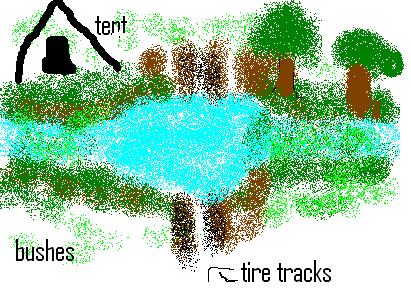
This is the site survey for Douglas Creek site 2 on May 9, 2011.The survey people are Hailey Kaden Braylen Taylor and Mr. Moreno.
First I will tell you of the riparian zone. The width for left bank is 0-50ft. and the right bank is 0-50ft. The vegetation has no conifer trees and deciduous is abundant. Shrubs are abundant and grasses and herbs are abundant. The overhead canopy is 50-75%.
Next I will tell you about the channel. The channel is what area the stream flows in. The shape cross section is steep sides and a flat bottom. The longitudinal pattern is braided and the gradient is moderate.
Next I will tell you about the stream banks. The vegetation on the stream bank is abundant. The protection is 0-25%. The banks stability has erosion in some areas.
We also surveyed the habitat in our reach. The number of riffles is about 10. The number of pools are 1. The percentage of riffles is 50-75% the percentage of the pools is 25%.
Now I will tell you about the land use adjacent to the stream. We have a road and there are camping spots. Also we had tire tracks in to the stream. We have some artificial structures like litter and garbage.
First I will tell you of the riparian zone. The width for left bank is 0-50ft. and the right bank is 0-50ft. The vegetation has no conifer trees and deciduous is abundant. Shrubs are abundant and grasses and herbs are abundant. The overhead canopy is 50-75%.
Next I will tell you about the channel. The channel is what area the stream flows in. The shape cross section is steep sides and a flat bottom. The longitudinal pattern is braided and the gradient is moderate.
Next I will tell you about the stream banks. The vegetation on the stream bank is abundant. The protection is 0-25%. The banks stability has erosion in some areas.
We also surveyed the habitat in our reach. The number of riffles is about 10. The number of pools are 1. The percentage of riffles is 50-75% the percentage of the pools is 25%.
Now I will tell you about the land use adjacent to the stream. We have a road and there are camping spots. Also we had tire tracks in to the stream. We have some artificial structures like litter and garbage.
water quality results
The average pH for site 2 in 2010 was 7.5. That means plants, catfish, and some insects can live there. Also bass, crappie, snails, clams, mussels, larger variety of organisms (salmon trout, may flies caddis flies stoneflies. Nest I will tell you about the temperature.
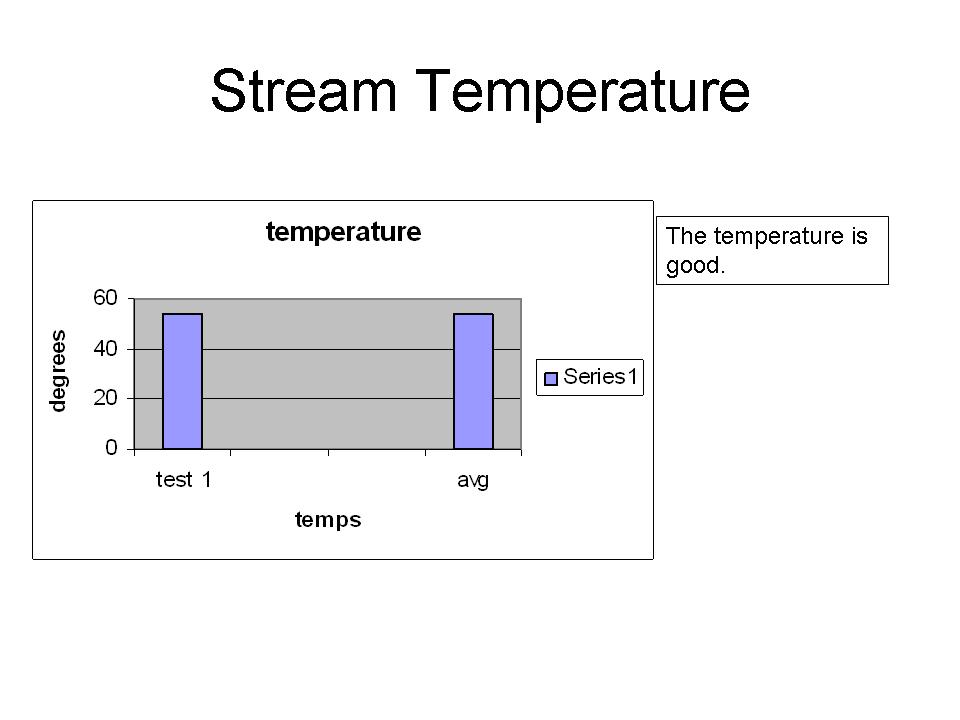
What we had for Test 1 was temp 54 & that is good for Test 2 &3 we did not do but for avg. it was 54 too.
What we had for Test 1 was temp 54 & that is good for Test 2 &3 we did not do but for avg. it was 54 too.





Subscribe to:
Posts (Atom)